
Tire Chains and Rigging Hardware: The Ultimate Guide to Winter Traction and Safety

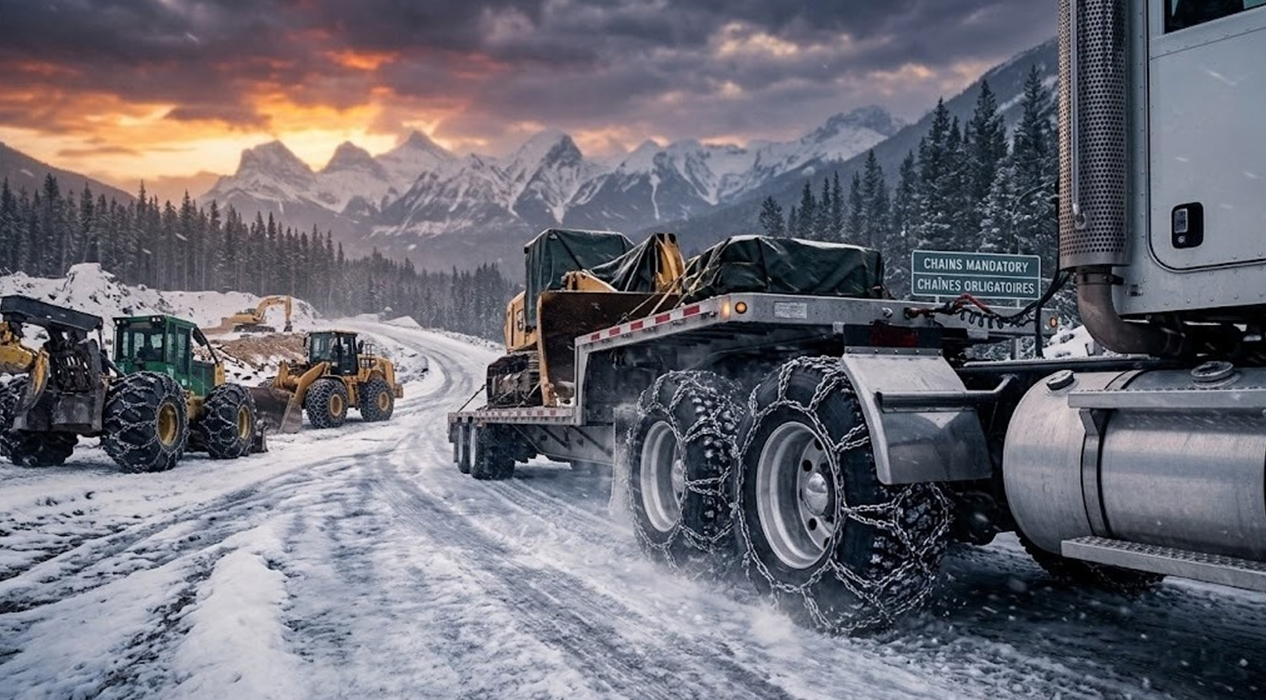
Winter driving across harsh terrain presents severe operational risks. Heavy snow, packed ice, and freezing rain reduce tire traction to dangerous levels, turning routine hauls, forestry operations, and construction work into hazardous tasks. Standard seasonal tires often fail when navigating icy mountain passes, muddy access roads, or unpaved industrial corridors.

Equipping your commercial fleet, heavy machinery, or personal vehicles with heavy-duty traction equipment is essential to prevent downtime, expensive towing bills, and severe jackknife accidents. According to transportation safety reports, commercial vehicles operating without proper traction control devices on frozen routes experience up to a 40% higher rate of winter weather incidents.

Whether you manage a logging operation, run heavy equipment, or transport transport cargo through unpredictable northern routes, understanding how to select, fit, and maintain your traction equipment keeps your fleet moving safely.

Why Tire Chains Are Essential for Severe Conditions

When roads freeze, the contact patch of a standard rubber tire loses its ability to grip the pavement or gravel. Tire chains act as a mechanical substitute, digging directly into compact ice and hard-packed snow to establish direct ground contact.

Critical Stats & Benefits

  • Traction Multiplier: Commercial-grade steel chains improve traction on packed ice by up to 300% to 500% compared to winter tires alone.

  • Stopping Distance: Equipping heavy vehicles with proper chain configurations reduces braking distances on frozen pavement by more than 50%.

  • Regulatory Compliance: Many primary highway networks enforce strict mandatory chain laws during winter months. Operating without them can lead to thousands of dollars in fines, safety record infractions, and mandatory out-of-service delays.

tire chains

Types of Tire Chains for Commercial and Heavy Equipment

Different industries demand specific tread patterns, link builds, and alloy strengths. Selecting the right design depends on tire size, clearance limitations, and terrain severity.

Chain TypeKey FeaturesBest Used For
Regular Round LinkStandard smooth round steel links; clean profile with steady ride qualityOn-highway haulers, highway transport trucks, light utility vehicles
V-Bar ChainsWelded steel V-bar cleats on cross links; extreme ice biteSteeper mountain passes, packed snow roads, heavy icy gradients
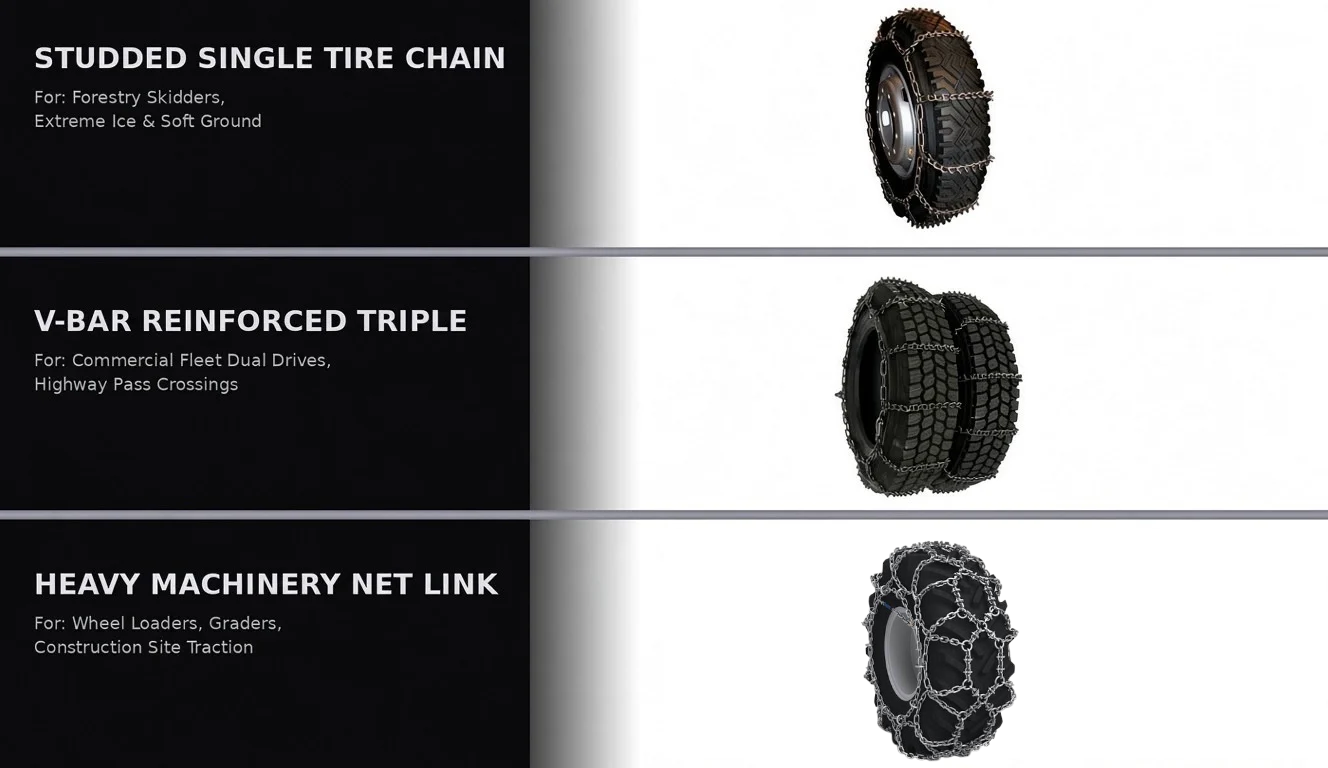
Studded Chains (e.g., Trygg)Alloy steel with embedded studs for maximum ground penetrationForestry machinery, logging trucks, extreme northern routes
H-Pattern & Net LinkContinuous net coverage over tire tread; prevents cross-chain sinkingLoader tires, graders, large construction machinery
Ring & Diamond PatternRinged cross-sections or diamond webbing; prevents side-slipSkidders, heavy forestry equipment, muddy or frozen slush trails
tire chains

1. Highway and Commercial Truck Chains

Available in Single (covering two outer drive wheels) and Triple configurations (covering dual rear wheels across both tires), highway chains keep transport trailers moving smoothly over iced roads. Options include standard round-link steel for smooth running or V-bar reinforced links for intense mountain climbs.

2. Heavy Machinery and Off-Road Chains

For heavy machinery like skid steers, loaders, and forklifts, continuous coverage patterns such as Net Link, Scan Trac, and H-Pattern prevent cross chains from dropping between tire lugs. They provide continuous ground contact, ensuring smooth power distribution without damaging wheel assemblies.

3. Forestry and Skidder Chains

Extreme timber extraction requires high-strength alloy chains designed to bite into frozen soil, ice, and deep mud. Heavy Ring Chains and Trygg Studded Singles or Triples feature hardened steel pins and studs that deliver continuous pull capacity under maximum horsepower.

Essential Accessories for Installation and Maintenance

A tire chain system is only as effective as its securement hardware. Without proper tensioning and routine adjustments, chains can slip, wear prematurely, or impact vehicle wheel wells.

1. Tensioners and Tighteners

Thermal contraction and tire flexing cause chains to stretch and shift while driving. Utilizing high-strength rubber or spring Tensioners and Four Point Tensioners keeps constant radial pull on the side chains, eliminating slack and preventing slap.

2. Installation Tools

Proper tools reduce install time from hours to minutes:

  • T-Wrenches & L-Wrenches: Essential for twisting cams and locking fast-hooks securely in place.

  • Tire Chain Pliers & Trygg Claw Tools: Specialty leverage tools built to open and close heavy-duty cross links without damaging the alloy.

  • Skidder Chain Tighteners / Tensioning Pliers: High-leverage hand tools designed to cinch heavy forestry chains over high-flotation tires.

3. Field Repair Hardware

Keep spare hardware in your rig’s toolbox to fix snapped cross links immediately on the road:

  • Repair Links & C-Hooks: Quick-connect links that allow operators to splice broken cross chains back together without removing the entire assembly.

  • Boomers & Load Binders: Auxiliary tensioning hardware used to lock down high-capacity tire wraps on extreme heavy machinery.

Installation Walkthrough: Step-by-Step


Upgrade Your Winter Fleet Readiness

Don’t let unexpected snowfall or freezing rain stall your operations. Equipping your fleet with high-grade traction hardware, custom tire builds, and durable tensioning tools guarantees site safety and reliable transit times all season long.

Explore our full inventory of heavy-duty single, triple, studded, and custom-fit chain solutions along with professional-grade repair tools by visiting the Continental Chain & Rigging Tire Chains Catalogue. Request a quote today to keep your equipment moving through the toughest weather.